

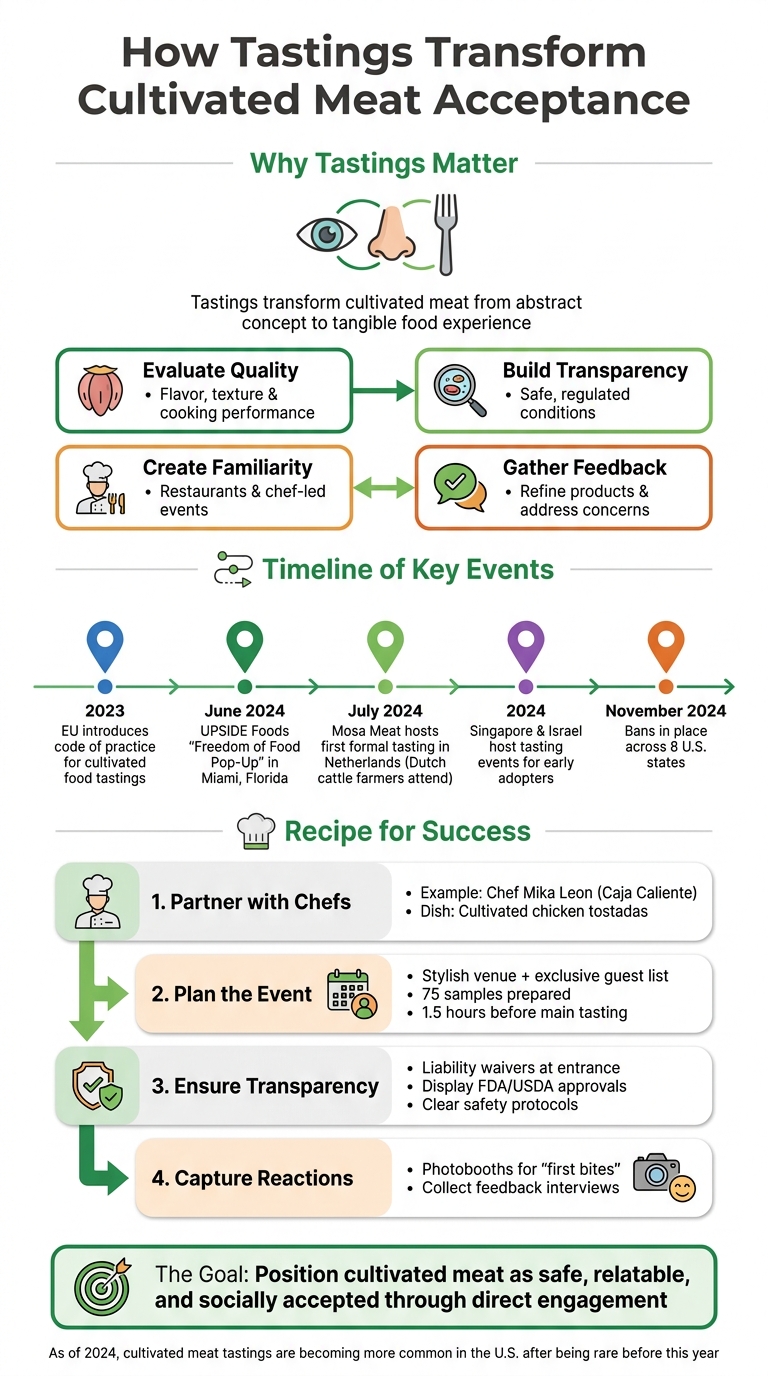
Tastings are transforming cultivated meat from an abstract concept into a tangible food experience. By letting people see, smell, and taste it, brands address scepticism and build trust in this new food category. Before 2024, tasting cultivated meat was rare in the U.S., but now events are bringing it to the forefront.
Key points:
- Tastings help consumers evaluate flavour, texture, and cooking performance.
- Events create transparency, showing how cultivated meat is made under safe, regulated conditions.
- Familiar settings like restaurants and chef-led events make the concept approachable.
- Feedback from tastings helps brands refine products and address concerns.
These events are not just about food - they’re about shifting perceptions and encouraging acceptance of cultivated meat as a viable option for the future.
How Cultivated Meat Brands Use Tastings to Build Consumer Trust
Taste testers try cultivated meat made in labs
sbb-itb-c323ed3
How Tastings Build Consumer Trust
When it comes to building trust in a product, nothing beats direct experience. Tastings provide a hands-on opportunity for consumers to evaluate Cultivated Meat by seeing, smelling, and tasting it. Instead of relying on claims or descriptions, people get to experience the product for themselves - turning abstract ideas into something tangible.
Because Cultivated Meat is still unfamiliar to many, transparency plays a key role. Controlled tastings conducted under formal guidelines show that companies are open and confident about their products. For example, in 2023, the EU introduced a code of practice allowing tastings of cultivated foods under regulated conditions before they gain full commercial approval [2]. This framework ensures that safety and quality are prioritised, even during early trials, offering participants peace of mind.
These events also provide valuable feedback. Input from a wide range of stakeholders - whether it’s cattle farmers or culinary experts - helps brands fine-tune their products and gauge market readiness [2]. By addressing diverse perspectives, companies can create stronger first impressions and refine their offerings.
Making a Good First Impression
First impressions matter, especially when it comes to food. If Cultivated Meat fails to deliver on taste or texture, no amount of marketing can compensate for that. The good news? Formal tastings have shown that cultivated products can closely mimic the flavour and texture of traditional meat. This immediate sensory experience is vital for gaining trust and winning over sceptics, particularly those who crave the taste of conventional meat.
Using Familiar Settings
Presenting new technology in familiar environments can make it feel less daunting. Hosting tastings in places like restaurants or chef-led events helps position Cultivated Meat as a natural extension of existing food culture.
Take the example of Mosa Meat. In July 2024, the company hosted the first formal tasting of its Mosa Burger in the Netherlands, adhering to the EU’s 2023 code of practice. Dutch cattle farmers and food industry representatives attended, evaluating the cultivated burger's taste and texture. By involving these trusted voices, Mosa Meat framed its product as a continuation of traditional meat production, blending innovation with familiarity [2].
Next, we’ll explore how these first impressions and familiar settings contribute to building lasting trust in Cultivated Meat through real-world tasting events. If you are interested in organizing your own event, follow this tasting night checklist to ensure a successful experience.
Examples of Cultivated Meat Tasting Events
Building trust often starts with first impressions, and cultivated meat brands are taking this further by using tasting events to connect with consumers in a hands-on way. These events allow people to experience the product directly, moving beyond abstract ideas into something tangible.
UPSIDE Foods has been proactive in hosting tastings to tackle political pushback. In states like Florida and Alabama, where legislative efforts aimed to ban cultivated meat, the company launched events under themes like "Freedom of Food" and "American identity" [3]. These gatherings combined food demonstrations with open conversations involving government officials. By focusing on "proven science" and "proven safety", the events addressed regulatory concerns while giving attendees a chance to explore the product’s taste and texture for themselves [4]. This approach helped shift the narrative from hypothetical debates to real-world experiences [3].
In Singapore, one of the first nations to approve cultivated meat for sale, tasting events have targeted early adopters. These events highlight the sensory appeal of the product while observing how communities react to and integrate this new category of food into their lives [3][4].
Similarly, Israel has used tastings to address regulatory challenges and create positive impressions among consumers [3]. These events not only promote the product but also provide a platform to gather feedback from people in everyday settings [3].
No matter the location, these tasting events play a key role in shaping perceptions of cultivated meat. They help establish it as safe, relatable, and socially accepted, effectively countering scepticism and political resistance through direct engagement [3].
How to Run Effective Tasting Events
Brands are fine-tuning their strategies to ensure tasting events leave a lasting impression and maximise their reach.
Working with Chefs
Collaborating with well-known chefs can instantly boost the credibility of cultivated meat tastings. For instance, during the "Freedom of Food Pop-Up" in Miami (June 2024), Chef Mika Leon of Caja Caliente showcased cultivated chicken tostadas topped with avocado, chipotle crema, and beet sprouts. This dish demonstrated that cultivated chicken not only looks and cooks like traditional chicken but also delivers on taste [3][4]. Such endorsements from professionals help reassure attendees about the product's authenticity and performance in the kitchen.
Chefs can also highlight the technical aspects of cultivated meat through live cooking demonstrations. Some chefs have noted that cultivated meat may cook faster than conventional options. By using large screens to display close-up views of the cooking process - showing the texture and juices - these demonstrations create a compelling visual experience that underscores the product's quality [3].
Event Planning and Protocols
While chef collaborations add culinary credibility, thoughtful event planning and clear protocols are just as important for a successful tasting. UPSIDE Foods, for example, created a sophisticated atmosphere by selecting a stylish venue and curating an exclusive guest list [3][4]. To build excitement, the main tasting was scheduled 1.5 hours into the event, with around 75 samples of cultivated chicken prepared for attendees [3].
Transparency about safety and regulatory compliance is crucial. At the entrance, attendees were required to sign liability waivers and photography consent forms, with event guidelines clearly displayed [3]. Highlighting regulatory milestones, such as FDA or USDA approvals, can help address any doubts or concerns among guests [3][4]. Collecting feedback is equally important - whether through photobooths capturing "first bites" or short interviews, these tools help gather genuine consumer reactions [3].
Finally, the flavour profile must be carefully considered. Avoid overpowering spices that could mask the product's natural taste, opting instead for seasonings that address taste and texture challenges to enhance it. Such meticulous planning helps align cultivated meat with the high standards of trusted dining experiences, boosting consumer confidence in the process [3].
Conclusion
Tasting events transform the concept of cultivated meat from an abstract idea into something people can see, touch, and taste. By bringing together a diverse group of participants, these events help position cultivated meat as a legitimate option on the dining table. They not only confirm the quality of the product but also open the door to addressing concerns around how it's made.
But it's about more than just taste. Transparent production methods play a huge role in winning over sceptics. Without clear demonstrations of how cultivated meat is made, some attendees may leave doubting whether what they're sampling truly represents the product. This underscores the importance of open, evidence-based communication about how cultivated meat is produced, its safety, and its nutritional value.
With bans in place across eight U.S. states as of November 2024 [1], tasting events are increasingly being framed as more than simple product showcases. For many brands, these events are a chance to educate consumers and advocate for food freedom, linking political challenges to the need for transparency in production.
As cultivated meat edges closer to becoming commercially available in the UK and Europe, educating consumers becomes even more critical. Cultivated Meat Shop is stepping up by providing resources and sneak peeks that help people understand what cultivated meat really is - and just as importantly, what it isn’t - long before it hits supermarket shelves.
FAQs
Are Cultivated Meat tastings safe and regulated?
Cultivated meat tastings are indeed safe and carefully regulated. In the UK and other regions, regulatory bodies are actively assessing and ensuring that safety standards are upheld. These tastings often occur in controlled settings, such as high-end restaurants, where conditions are closely monitored. This provides a secure environment for consumers to try cultivated meat with confidence.
Why do brands host tastings in restaurants with chefs?
Brands are teaming up with chefs to host tastings in restaurants, offering cultivated meat in familiar, high-end culinary settings. These events allow diners to experience the flavour, texture, and versatility of cultivated meat through expertly prepared dishes. At the same time, they provide an opportunity to gather valuable feedback from consumers. By working with chefs, brands add a sense of credibility and excitement, presenting cultivated meat as a premium and appealing alternative to traditional meat. This approach helps spark early interest and acceptance among diners.
How do tasting events influence laws and public opinion?
Tasting events play a key role in shaping public perception and even influencing legislation regarding cultivated meat. By giving people the chance to experience its flavour, texture, and overall quality firsthand, these events help build trust and familiarity. They can also challenge scepticism by showcasing the product’s safety and appeal, potentially easing regulatory hurdles. Beyond that, tastings often spark conversations and advocacy, which can contribute to legislative changes and encourage broader acceptance of cultivated meat.


